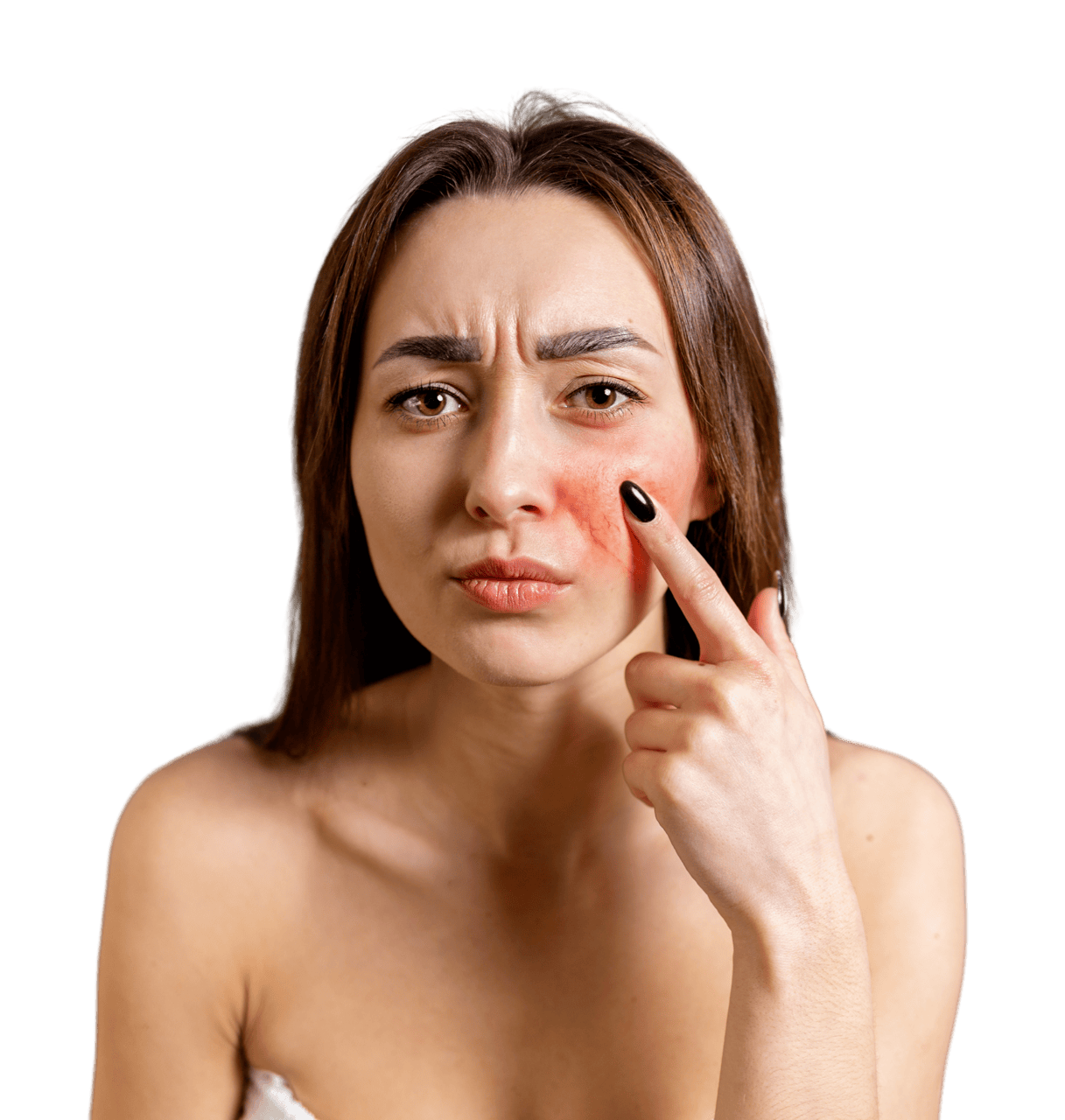
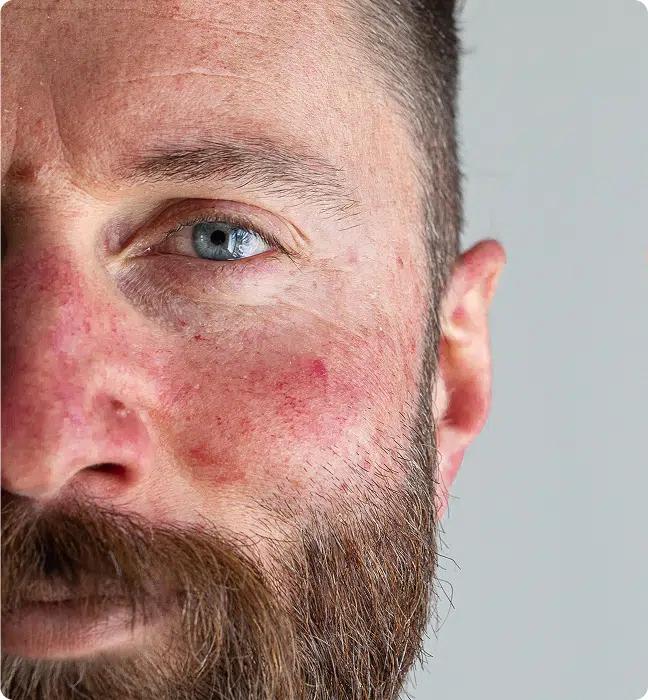
Rosacea is a chronic inflammatory skin condition that affects thousands of people in Ireland, especially adults over 30. With treatments you can manage symptoms and prevent flare-ups.
Living with rosacea isn’t just about managing redness; it’s about managing confidence. The flare-ups, sensitivity, and unpredictable triggers can make even simple routines frustrating.
Many people try over-the-counter creams that irritate or stop working after a few days.
With smartscripts.ie, you can finally access effective, prescription rosacea treatments prescribed by Irish-registered doctors, all without the wait, stress, or clinic visit.
Understanding Rosacea
Rosacea is a long-term inflammatory skin condition that mainly affects the face - often the cheeks, nose, chin, and forehead.
It causes persistent redness, visible blood vessels, and sometimes small bumps or spots that resemble acne.
Many people also experience burning, stinging, or flushing, which can make the skin feel hot or sensitive to even gentle products.
Doctors don’t know the exact cause, but research suggests that rosacea involves a mix of blood-vessel over-reactivity, immune system sensitivity, and skin-barrier disruption. Genetics and certain environmental factors also play a role.
It’s a chronic condition, meaning it can’t be permanently cured - but it can be controlled very effectively with the right treatment and trigger management.
Without treatment, flare-ups can become more frequent or intense over time.
Rosacea Triggers & Symptoms
The exact cause of rosacea is not fully understood, but contributing factors include:
- Overactive immune response or inflammation
- Genetic predisposition (more common in fair-skinned individuals)
- Demodex mites, which naturally live on the skin but may triggerirritation
- Environmental and lifestyle triggers, such as:1. Sun exposure2. Hot drinks or spicy foods3. Alcohol4. Stress or extreme temperatures5. Certain skincare products
You may have rosacea if you notice:
- Persistent facial redness or flushing
- Visible small blood vessels (telangiectasia)
- Pimples or spots that resemble acne but do not contain blackheads
- Eye irritation, dryness, or watery eyes (ocular rosacea)
- Thickened skin, especially around the nose (in advanced cases)